

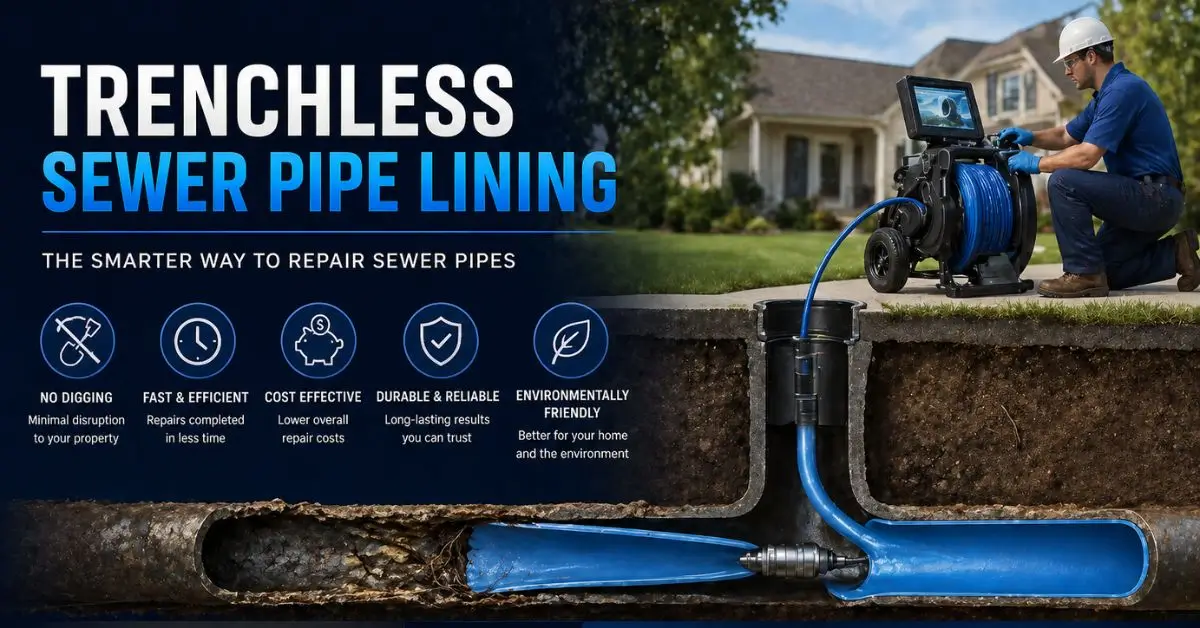
Trenchless Sewer Pipe Lining
A damaged sewer line used to mean one thing heavy machinery in your yard, torn-up landscaping, cracked driveways, and weeks of disruption. For most homeowners, the thought of traditional sewer excavation is almost as stressful as the plumbing problem itself.
That’s changed significantly. Trenchless sewer pipe lining has become one of the most practical and widely used solutions for repairing damaged underground pipes — with minimal digging, less disruption, and results that often last longer than a full pipe replacement.
But it’s not right for every situation, and not every contractor explains it honestly. This guide gives you a clear, unbiased look at how trenchless pipe lining works, what the process involves, what it realistically costs, and how to know whether it’s the right option for your specific problem.
What Is Trenchless Sewer Pipe Lining?
Trenchless sewer pipe lining is a pipe repair method that rehabilitates a damaged underground sewer pipe from the inside — without digging up the ground above it. A flexible liner coated with resin is inserted into the existing pipe, expanded to fit the interior walls, and then cured in place to form a new, smooth pipe within the old one. The result is a structurally sound pipe that restores full flow without excavation.
Quick Summary
- Trenchless pipe lining repairs damaged sewer pipes from the inside with no major digging
- The most common method is CIPP (cured-in-place pipe lining)
- It works on most pipe materials — clay, cast iron, PVC, concrete
- Costs typically range from $80 to $250 per linear foot in the US
- It’s not suitable for fully collapsed pipes or severely offset joints
- Properly installed liners can last 50 years or more
Why Sewer Lines Fail – and Why It Matters
Most residential sewer lines were built to last — but they don’t last forever. Depending on when your home was built and what the pipes are made from, you could be dealing with:
- Tree root intrusion — roots seek out moisture and grow into pipe joints, cracking them open over time
- Corrosion and rust — cast iron pipes corrode from the inside out, eventually restricting flow and developing holes
- Ground movement — soil shifting, freeze-thaw cycles, and nearby construction cause pipes to crack or separate at joints
- Age-related deterioration — clay and concrete pipes from the mid-20th century are now reaching the end of their functional lifespan
- Grease and buildup — years of accumulation roughen pipe walls and restrict flow, eventually causing structural stress
A damaged sewer line doesn’t just affect drainage. Raw sewage backing up into a home is a serious health hazard. Slow or partial blockages cause ongoing damage to the pipe and surrounding soil. The longer a sewer problem is left, the more expensive the eventual fix.
How Trenchless Sewer Pipe Lining Works
The process sounds complex, but it’s actually straightforward once you understand the steps.
Step 1: Camera Inspection
Before any work begins, a licensed plumber runs a CCTV camera through the sewer line to assess the condition of the pipe — its diameter, the type and extent of damage, any root intrusion, and whether the pipe is suitable for lining.
This inspection is critical. It tells the contractor exactly what they’re working with and confirms whether trenchless lining is viable. A reputable company will share the camera footage with you and explain what it shows.
Step 2: Pipe Cleaning
The existing pipe is cleaned thoroughly using high-pressure water jetting. This removes root debris, grease buildup, scale, and any loose material from inside the pipe walls.
The pipe needs to be as clean as possible for the liner to bond correctly. Skipping or rushing this step is one of the most common reasons trenchless lining fails prematurely.
Step 3: Liner Preparation
A flexible felt tube — typically made from polyester or fiberglass — is cut to the exact length of the pipe section being repaired. It’s saturated with a thermosetting resin (usually epoxy or polyester resin) that will harden when cured.
The saturated liner is then loaded into the insertion equipment, ready to be placed inside the host pipe.
Step 4: Liner Insertion and Inflation
The liner is inserted into the pipe through an existing access point — usually a cleanout, a manhole, or a small access pit. It’s then inflated using air or water pressure, which pushes the liner outward until it presses firmly against the interior walls of the host pipe.
This step requires precision. The liner must make full, even contact with the pipe wall to cure correctly and create a seamless interior surface.
Step 5: Curing
The resin is cured — hardened — using one of three methods depending on the system being used:
- Ambient cure: The resin hardens naturally at room temperature over several hours
- Hot water cure: Hot water is circulated through the liner to speed up the curing process
- UV light cure: A UV light train is pulled through the liner, curing the resin rapidly and precisely
UV curing is increasingly common because it’s fast, controlled, and produces a very consistent result. A 50-meter pipe section can be cured in under an hour.
Step 6: Reinstatement and Final Inspection
Once cured, the inflation bladder is removed, and any lateral connections (branch pipes joining the main line) that were covered by the liner are reopened using a robotic cutting tool.
A final CCTV inspection confirms the liner has bonded correctly, the surface is smooth, and flow has been fully restored. The job is complete — with no trench, no destroyed landscaping, and typically minimal surface disruption.
The Two Main Trenchless Methods Compared
Trenchless sewer pipe lining (CIPP) is the most common trenchless method, but it’s worth understanding how it compares to the other main option — pipe bursting.
| Method | How It Works | Best For | Disruption Level | Pipe Size Change |
|---|---|---|---|---|
| CIPP Lining | New liner formed inside existing pipe | Cracked, corroded, or root-damaged pipes | Very low | Slight reduction in diameter |
| Pipe Bursting | Old pipe shattered and replaced simultaneously | Collapsed or severely damaged pipes | Low–Medium | Same or larger diameter |
CIPP lining is ideal when the existing pipe is damaged but still structurally present — cracked, corroded, or infiltrated by roots, but not collapsed.
Pipe bursting is used when the pipe is too far gone for lining collapsed sections, severe displacement, or pipes that can’t hold a liner in place. It still requires minimal excavation compared to traditional methods, but slightly more than pure lining.
What Trenchless Pipe Lining Costs
Cost varies based on pipe length, diameter, depth, access difficulty, and regional labor rates. Here’s a realistic range:
United States:
- Average cost: $80 to $250 per linear foot
- Typical residential sewer line (50–100 feet): $4,000 to $20,000
- Full traditional excavation for comparison: $50 to $200 per linear foot — but with significantly higher disruption costs (landscaping, driveway repair, etc.)
United Kingdom:
- Average cost: £70 to £180 per linear meter
- Typical job: £3,000 to £12,000 depending on length and access
Canada:
- Similar to US pricing — CAD $100 to $300 per linear foot depending on province and accessibility
A homeowner in suburban New Jersey had a 60-foot clay sewer line with extensive root intrusion and two cracked sections. Traditional excavation quotes came in at $12,000–$15,000. A CIPP lining job completed it for $7,500 — with no damage to the mature trees or brick driveway above the pipe. The liner carried a 50-year manufacturer warranty.
When Trenchless Lining Works – and When It Doesn’t
Trenchless sewer pipe lining is highly effective in the right situation. But it has real limitations that any honest contractor should explain upfront.
Trenchless lining works well when:
- The pipe is cracked, corroded, or root-infiltrated but still structurally intact
- The pipe runs under a driveway, landscaping, or structure that would be expensive to excavate
- The pipe diameter is consistent and accessible from at least one end
- The damage is spread along the pipe length rather than concentrated at one point
Trenchless lining is NOT suitable when:
- The pipe has fully collapsed — there’s no structure for the liner to bond to
- Joints are severely offset or misaligned — the liner can’t bridge large gaps
- The pipe has significant diameter changes along its length
- Bellied sections (low spots where waste pools) are present — lining won’t correct the slope
A thorough camera inspection should reveal all of these issues before any work is quoted. If a contractor quotes for lining without first running a camera, that’s a serious red flag.
How Long Does Trenchless Pipe Lining Last?
A properly installed CIPP liner is rated to last 50 years or more. The liner itself is chemically resistant to the acids and gases present in sewage, and the smooth interior surface actually resists root intrusion and buildup better than the original pipe.
The key word is “properly installed.” Quality of installation matters enormously — the resin saturation, the curing process, and the final inspection all affect the liner’s longevity. Always ask for:
- Manufacturer warranty on the liner material (typically 10–50 years)
- Contractor workmanship warranty (typically 1–5 years)
- Post-installation CCTV report
Choosing the Right Contractor
Not all trenchless pipe lining contractors are equal. Here’s what to look for:
Ask for a pre-job CCTV inspection — and ask to see the footage yourself. You should understand what’s wrong before agreeing to any work.
Get at least two quotes. Pricing varies significantly, and a second opinion often reveals different diagnoses or more appropriate solutions.
Check licensing and insurance. In most US states, sewer line work requires a licensed contractor. Always verify before signing anything.
Ask about the resin and liner brand. Reputable contractors use established liner systems with documented performance records — not generic materials.
Ask what happens if the lining fails. A confident contractor will explain their warranty terms and what they’ll do if the liner doesn’t perform as expected.
Conclusion
Trenchless sewer pipe lining has genuinely changed how sewer repairs are handled — giving homeowners a faster, cleaner, and often more cost-effective alternative to full excavation. For cracked, corroded, or root-damaged pipes that are still structurally present, it’s one of the best options available.
The key is going in with the right information. Understand what the camera inspection shows, get multiple quotes, ask the right questions about materials and warranties, and make sure the contractor is licensed and experienced.
A sewer problem doesn’t have to mean a destroyed yard and weeks of disruption. In most cases, it doesn’t have to mean that at all.
Frequently Asked Questions
How long does trenchless sewer pipe lining last?
Usually 50 years or more if installed properly.
Is trenchless pipe lining worth the cost?
Yes, especially if excavation would damage your yard, driveway, or landscaping.
Can trenchless lining fix tree root damage?
Yes. Roots are cleared first, then the liner seals the entry points.
How long does the trenchless pipe lining process take?
Most residential jobs take 4 to 8 hours and finish in one day.
Does trenchless lining reduce pipe diameter?
Yes, slightly — but usually not enough to affect flow.
What pipe materials can be lined with CIPP?
Clay, cast iron, concrete, PVC, and orangeburg can usually be lined.