

Why Plumbing Installation Is One of the Most Important Home Decisions You Will Make
Every home depends on its plumbing system working correctly. Water comes in clean. Wastewater leaves safely. Hot water arrives on demand. These functions are so fundamental that most homeowners never think about the plumbing system at all — until something goes wrong or they need to add to it.
That is when the questions start. If you are building a new home, adding a bathroom, renovating a kitchen, replacing aging pipes, or installing a new water heater, you are dealing with plumbing installation decisions that carry real financial, safety, and legal consequences.
Get it right and your home functions reliably for decades. Get it wrong and you face water damage, failed inspections, health hazards from incorrect drainage, or expensive repairs to fix work that was not done properly the first time.
This guide covers what plumbing installation actually involves — the systems, the process, the costs, the permit requirements, and the honest guidance on what homeowners can handle themselves and what genuinely requires a licensed plumber.
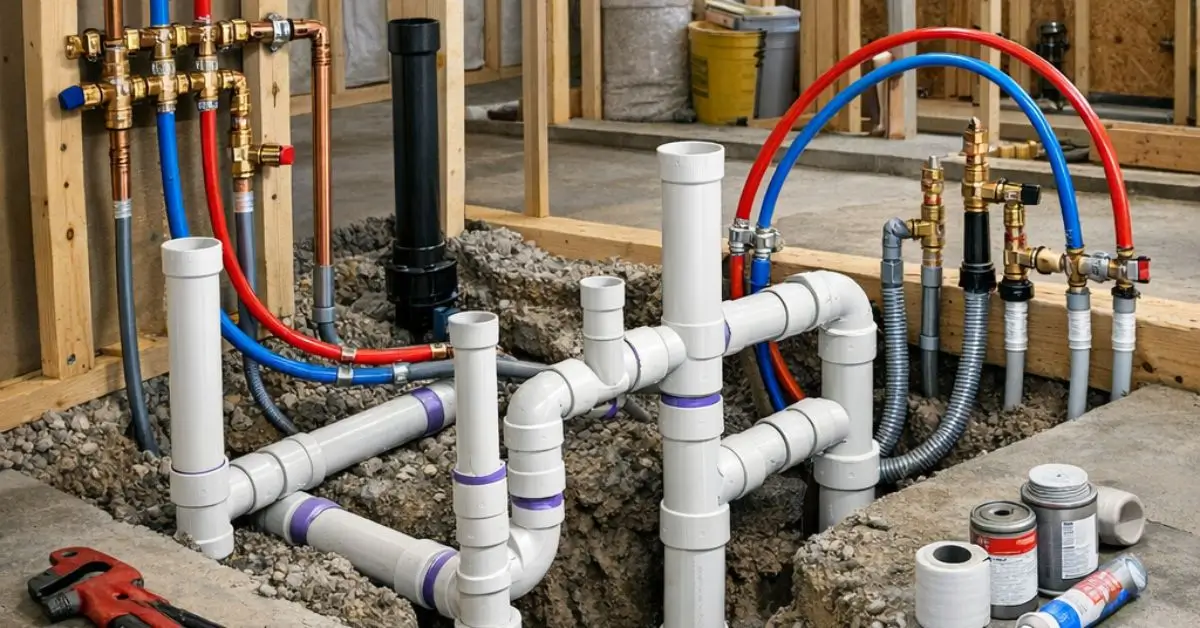
Plumbing installation refers to the process of setting up the network of pipes, fittings, fixtures, and appliances that deliver fresh water to a building and remove wastewater from it. This includes supply lines that bring cold and hot water to sinks, showers, toilets, and appliances; drain-waste-vent systems that carry used water out safely; and fixture installation — faucets, toilets, water heaters, and dishwashers — connected to these systems.
Quick Summary
This guide covers all major types of plumbing installation, explains the process step by step, provides honest cost ranges for US homeowners, addresses permit and code requirements, and gives clear guidance on professional versus DIY decisions for each installation type.
The Two Core Systems in Any Plumbing Installation
Before getting into specific installation types, it is worth understanding the two systems that every plumbing installation involves — because understanding the structure of these systems helps you understand why certain installations are simple and others are complex.
The Supply System
The supply system brings pressurized clean water into your home and distributes it to every fixture and appliance that needs it. Cold water comes in from the municipal supply or a private well, gets routed through your home’s main pipe, and branches out to individual fixtures. Hot water runs through a separate line after being heated by your water heater.
Supply pipes work under pressure — typically between 40 and 80 PSI in a residential setting. They need to be watertight because any leak is active: pressurized water will flow continuously through any gap until it is fixed. Supply lines in modern US homes are most commonly made of copper, CPVC, or PEX tubing.
The Drain-Waste-Vent System
The drain-waste-vent (DWV) system works by gravity. Wastewater flows downhill through drain pipes to the main sewer line or septic system. Every drain needs a trap — the curved section of pipe under sinks and behind toilets — that holds water and prevents sewer gases from entering the home.
The vent portion of this system is often overlooked but equally important. Vent pipes run up through the walls and out through the roof, allowing air into the drain system so that water flows freely and creating the pressure equalization that prevents trap water from being siphoned away.
Understanding that every plumbing installation involves both of these systems — supply and drainage — helps explain why adding a fixture is not just a matter of running one pipe. It requires connecting to both systems correctly and, in most cases, obtaining permits.
Types of Plumbing Installation
Plumbing installation covers a wide range of work. Here is a clear breakdown of the main categories US homeowners encounter.
New Construction Plumbing Installation
New construction plumbing is done in phases. Rough-in plumbing happens before walls are closed — this is when all the supply pipes, drain pipes, and vent pipes are run through the framing and connected to the main water supply and sewer or septic system.
The rough-in phase requires a plumbing inspection before walls can be closed. This is non-negotiable in virtually all US jurisdictions. After walls are closed and finished, the trim-out phase installs the actual fixtures — toilets, sinks, faucets, shower valves, and appliances.
New construction plumbing installation for a standard 2,000 square foot house with two and a half bathrooms typically costs between $8,000 and $15,000 in the US, though this varies significantly by region and local labor rates.
Bathroom Addition Plumbing
Adding a bathroom to an existing home is one of the most common plumbing installation projects homeowners undertake. It requires:
- Running supply lines from the nearest existing supply point to the new bathroom location
- Installing drain lines that slope correctly to the main drain
- Adding vent pipes that connect to the existing vent stack or run independently to the roof
- Installing all fixtures in the finished space
The complexity — and cost — depends heavily on where the new bathroom is located relative to existing plumbing. A bathroom added directly above or adjacent to existing plumbing is significantly less expensive than one that requires running pipes across the full length of a house.
A typical bathroom addition plumbing installation in the US costs between $3,500 and $8,000, not including the cost of fixtures, tiles, or general contracting work.
Kitchen Plumbing Installation
Kitchen plumbing involves the sink supply and drain lines, dishwasher supply and drain connection, refrigerator ice maker line if applicable, and gas line for gas ranges — though gas line work is typically handled by a gas-licensed contractor separately from plumbing.
Installing a new kitchen sink in an existing cabinet location is a relatively straightforward plumbing project. Moving the sink to a different location — particularly across the kitchen — requires relocating both supply lines and drain lines, which is significantly more complex and more expensive.
A standard kitchen sink installation typically costs $200 to $600 for a plumber in the US. A full kitchen plumbing relocation involving new pipe runs can cost $1,500 to $4,000 or more.
Water Heater Installation
Water heater installation involves connecting supply lines, a pressure relief valve, a discharge pipe, and either a gas line and flue or an electrical connection depending on the heater type. Most US jurisdictions require a permit for water heater installation even when replacing an existing unit with the same type.
A standard tank water heater installation — replacing an existing unit — costs $800 to $1,500 in labor and equipment combined for most US markets. Tankless water heater installation is typically more expensive — $1,500 to $3,500 — because it often requires upgrading gas line capacity or electrical panel capacity.
Fixture Installation — Faucets, Toilets, and Showers
Installing individual fixtures is where the DIY versus professional decision is most nuanced. Replacing a faucet on an existing sink — where the supply connections are accessible and shutoff valves work — is genuinely within the capability of a careful DIY homeowner. YouTube has made this process well-documented and achievable.
Replacing a toilet on an existing flange is similarly approachable for DIY. The process involves turning off the supply, flushing and emptying the tank, removing the old toilet, inspecting the flange, setting a new wax ring, and setting and securing the new toilet.
Shower installation — particularly a tiled shower with a new pan or liner — is significantly more complex. Waterproofing must be done correctly or water damage behind the walls develops slowly and expensively. For shower installations, professional work is strongly recommended unless you have specific construction experience.
Pipe Replacement — Repiping
Homes with aging galvanized steel pipes — common in houses built before 1970 — often require full repiping as the pipes corrode, restrict water flow, and eventually fail. Whole-home repiping involves replacing all supply lines throughout the house with modern copper or PEX piping.
This is a major project. A whole-home repipe for an average US house costs between $4,000 and $15,000 depending on house size, pipe material chosen, and local labor rates. It requires permits and inspections in virtually all US jurisdictions.
Permit Requirements — What US Homeowners Need to Know
This is the area where many DIY plumbing projects go wrong — not because the work is done incorrectly, but because required permits are not obtained.
In the United States, most plumbing installation work beyond simple fixture replacement requires a permit from your local building department. This includes:
- New bathroom or kitchen plumbing
- Water heater replacement
- Any work involving moving or adding drain, waste, or vent pipes
- Whole-home repiping
Permits exist for good reasons. They ensure an inspector verifies that the work meets local plumbing codes — which are based on the International Plumbing Code or Uniform Plumbing Code depending on your jurisdiction. This protects you from safety hazards, ensures your home insurance remains valid, and prevents problems when you sell the house.
A homeowner in Phoenix who had a bathroom addition plumbing installed without permits discovered the issue when selling the house — the buyer’s inspector flagged the unpermitted work, and the sale was delayed while a licensed plumber inspected, documented, and remediated the installation to bring it up to code.
Getting permits is not complicated. Your licensed plumber will typically handle permit applications as part of their service. If you are doing permitted DIY work, your local building department will guide you through the application process.
Professional vs. DIY Plumbing Installation — Honest Assessment
| Installation Type | DIY Feasible | Professional Recommended | Permit Required |
|---|---|---|---|
| Faucet replacement — existing location | Yes | For complex situations | Usually No |
| Toilet replacement — existing flange | Yes | If flange is damaged | Usually No |
| Showerhead replacement | Yes | No | No |
| Water heater replacement | Technically yes | Strongly recommended | Yes — almost always |
| Sink installation — existing location | Yes for experienced DIYers | Recommended | Usually No |
| Bathroom addition | No | Yes — licensed plumber | Yes |
| Kitchen plumbing relocation | No | Yes — licensed plumber | Yes |
| Whole-home repiping | No | Yes — licensed plumber | Yes |
| New construction rough-in | No | Yes — licensed plumber | Yes |
How to Choose a Licensed Plumber for Installation
When professional plumbing installation is necessary — which it is for most significant work — choosing the right plumber matters as much as the decision to hire one.
Verify license and insurance. In the US, plumbers are licensed at the state level. Verify that any plumber you hire holds a current license in your state and carries both general liability insurance and workers’ compensation coverage. Your state’s contractor licensing board website allows you to verify license status online.
Get multiple estimates. For significant plumbing installation projects, get at least three written estimates from licensed plumbers. Estimates should specify the scope of work, materials to be used, timeline, permit handling, and payment terms.
Understand the estimate structure. Plumbing estimates are typically structured as time and materials or flat rate. For straightforward installations, flat-rate pricing gives you certainty. For more complex work where the full scope is not known in advance, time-and-materials is more common.
Ask about permit handling. A legitimate licensed plumber will handle permit applications as a standard part of the job. Be cautious about any plumber who suggests skipping permits — this creates liability for you as the homeowner and may violate local law.
Conclusion
Plumbing installation is one of the most consequential home systems decisions you will make — whether you are building new, adding on, or maintaining what you have. Done correctly by a licensed professional with proper permits, a quality plumbing installation serves your home reliably for decades. Done incorrectly, it creates problems that are expensive, disruptive, and sometimes dangerous to correct.
The key decisions for most US homeowners are knowing which projects are genuinely appropriate for capable DIYers, understanding when licensed professional installation is necessary, and ensuring that any significant work is permitted and inspected.
If you found this guide useful for understanding what plumbing installation involves, explore more content on specific installation types, how to prepare your home for plumbing work, and how to maintain your plumbing system to extend its life and prevent costly repairs.
Frequently Asked Questions
What is included in a plumbing installation?
Plumbing installation includes water supply lines, drain and vent pipes, fixture installation, water heaters, and required connections. Permits and inspections may also be included.
How much does plumbing installation cost in the USA?
Simple fixture installations cost around $200–$600, while larger projects like bathroom additions or whole-home plumbing can range from $3,500 to $15,000+, depending on size and location.
Do I need a permit for plumbing installation?
Yes. Most plumbing projects beyond basic fixture replacement require a permit. Your licensed plumber can usually handle the permit process.
Can I install plumbing myself?
Basic jobs like replacing a faucet or toilet are DIY-friendly. New pipe installations, water heaters, and major plumbing work should be completed by a licensed plumber.
How long does plumbing installation take?
Simple installations usually take 1–3 hours. Bathroom plumbing may take 1–3 days, while whole-home plumbing is completed in stages during construction.