

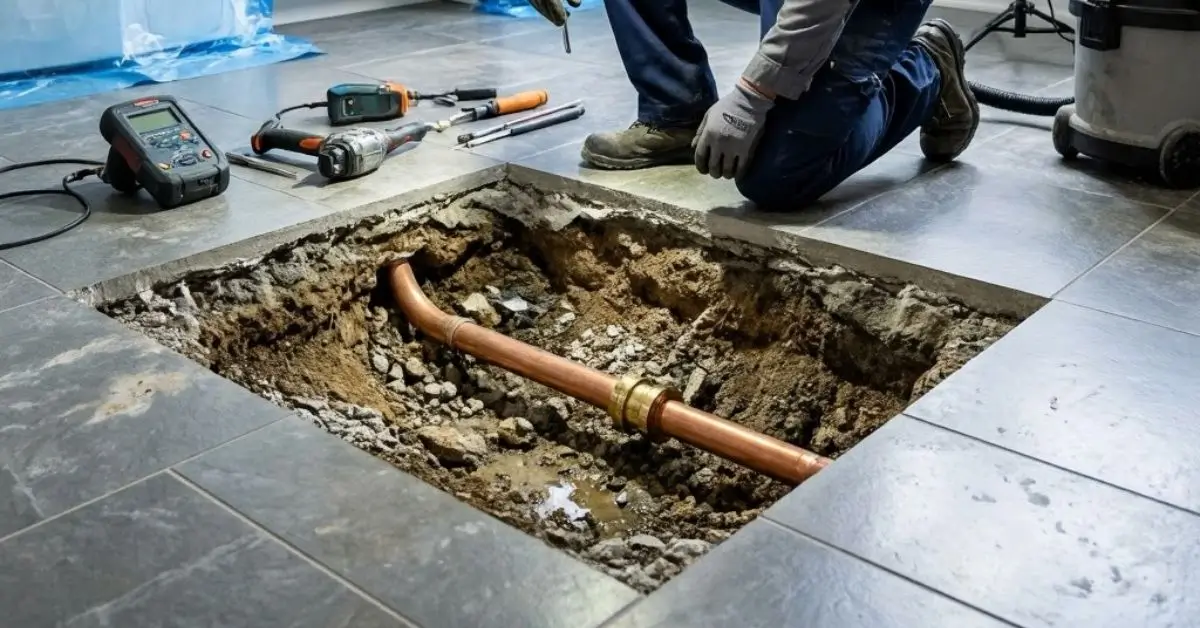
Slab Leak Repair
There is water somewhere under your floor, and you cannot see it. No visible pipe. No dripping faucet. Just a soft wet patch on your floor, a higher water bill, or the sound of running water when everything is turned off.
That is what a slab leak feels like from the inside. And it is one of the plumbing problems homeowners dread most, not because it is impossible to fix, but because it hides beneath the concrete foundation of your home.
The good news is that slab leak repair is well understood. Plumbers deal with this regularly. With the right approach, the damage can be stopped and the pipe can be fixed without tearing your entire home apart.
This guide explains what a slab leak is, how to spot one early, what repair options exist, what the work actually costs, and when you need to call a professional immediately.
What Is a Slab Leak?
A slab leak is a water leak that occurs in the pipes running beneath your home’s concrete foundation, called the slab. These pipes carry hot or cold water and can crack or corrode over time. Because they sit underground, the leak is hidden and can cause serious structural damage if not caught early.
Quick Summary
A slab leak happens when pipes under your concrete floor start leaking. You usually notice it through wet floors, high water bills, or running water sounds. Repair options include epoxy pipe lining, pipe rerouting, and direct access repair. Costs in the US typically range from $500 to $4,000 depending on the method and location.
Why Slab Leaks Happen
Concrete foundations hold up your home, but the pipes buried inside them are not designed to last forever.
Several things cause these underground pipes to fail:
Corrosion is the most common cause. Over decades, the minerals in your water slowly wear down copper or galvanized pipes. Hot water lines corrode faster because heat speeds up the process.
Soil movement is another major factor. In places like Texas, California, and parts of the Midwest, the ground shifts with moisture changes. When the soil under your slab moves, it puts pressure on buried pipes, causing them to crack or rub against the concrete until they wear through.
Poor installation also plays a role. If pipes were bent too sharply during construction or laid without proper support, weak points develop over time.
Water pressure issues can also damage underground lines. When the pressure in your system runs consistently high, it stresses every joint and connection, including the ones you cannot see.
Older homes built before the 1980s are especially vulnerable because the pipe materials used then did not hold up as well as modern options.
Warning Signs You Should Never Ignore
The tricky part about a foundation leak is that you cannot see it. By the time you notice something is wrong, the leak may have already been running for weeks or months.
Here are the signs to watch for:
Unexplained jump in your water bill. If your usage habits have not changed but your bill went up noticeably, water is going somewhere it should not be.
Sound of running water. If you hear water moving through your home when every tap is off and every appliance is idle, that is a serious signal.
Warm or wet spots on the floor. A hot water pipe leak will warm up the concrete or flooring above it. You may notice a soft, warm patch on your tile or hardwood.
Cracks in walls or flooring. When water saturates the ground under a slab, the foundation can shift. That shift often shows up as cracks in the walls, floors, or around doorframes.
Low water pressure. If pressure drops throughout your home with no obvious cause, a leak underground may be the reason.
Mold or musty smell. Even underground, a long-running leak creates moisture that travels up through the slab and leads to mold beneath flooring or behind walls.
If you are noticing two or more of these at the same time, do not wait. Call a licensed plumber who specializes in leak detection.
How Plumbers Find a Slab Leak
Before any repair can happen, the leak has to be located precisely. Digging randomly through a concrete floor is expensive and damaging.
Professional plumbers use specialized equipment for this:
- Electronic leak detection listens for the sound of escaping water using sensitive microphones placed against the floor.
- Pressure testing isolates sections of pipe to confirm where the drop in pressure occurs.
- Thermal imaging detects temperature differences in the slab caused by hot water leaks.
- Tracer gas fills the pipe with a safe, detectable gas that escapes at the leak point.
A good plumber will locate the leak within a few inches before any cutting or digging begins.
Slab Leak Repair Methods Explained
Once the leak is found, there are three main approaches to fixing it. The right choice depends on the pipe’s condition, the leak’s location, and your budget.
Direct Access Repair (Spot Repair)
The plumber cuts into the concrete directly above the leak, fixes the damaged section of pipe, and patches the slab.
This works well when the leak is isolated and the rest of the pipe is in good condition. It is the most affordable option for a single, clearly located leak.
The downside is that it involves jackhammering through your floor, which creates dust, noise, and temporary disruption. The flooring above that section also needs to be repaired afterward.
Pipe Rerouting (Bypassing)
Instead of digging under the slab, the plumber installs a completely new pipe that runs through the walls or attic, bypassing the old underground line entirely.
This is a strong long-term solution when the pipes throughout the slab are aging and likely to develop more leaks. It avoids concrete work altogether, but involves some work in the walls.
Epoxy Pipe Lining (Trenchless Repair)
A flexible epoxy liner is inserted into the existing pipe and inflated to coat the inside of the line. Once it cures, it creates a new smooth surface inside the old pipe.
This is the least invasive option. There is no jackhammering and no major wall work. It works well for smaller leaks in pipes that are otherwise structurally intact.
The limitation is that it does not work well on pipes that are already badly corroded or collapsed.
Repair Method Comparison
| Method | Invasiveness | Best For | Approximate US Cost |
|---|---|---|---|
| Direct Access Repair | Medium – concrete cutting | Single, isolated leak | $500 – $1,500 |
| Pipe Rerouting | Low – wall/attic work | Aging pipe systems | $1,500 – $4,000 |
| Epoxy Pipe Lining | Very Low – no digging | Minor leaks, intact pipes | $1,000 – $3,500 |
Costs vary by location, pipe depth, and labor rates. Always get at least two written quotes.
What Slab Leak Repair Actually Costs in the US
In most US cities, the total cost of slab leak repair falls between $500 and $4,000. That range is wide because the price depends heavily on:
- Location of the leak — under a bathroom versus open living space makes a big difference
- Depth of the pipe — deeper pipes mean more concrete work
- Repair method chosen
- Local labor rates — a plumber in San Diego charges more than one in rural Ohio
A homeowner in Phoenix, for example, recently paid around $1,800 for a direct access repair on a hot water line under their kitchen floor. The detection took two hours and the repair took most of a day.
Always ask for a written estimate that separates the detection cost from the repair cost. Some companies charge $200 to $500 just for the leak detection service.
Does Homeowner’s Insurance Cover It?
Often yes, for the water damage itself — but not always for the repair of the pipe. Read your policy carefully and call your insurer before work begins. Many policies cover sudden damage but not gradual leaks.
Can You Fix a Slab Leak Yourself?
Honestly, no. Not in any practical sense.
You cannot locate the leak without professional equipment. You cannot safely cut concrete without knowing exactly where the leak is and what other utilities run nearby. And the repair itself requires proper pipe work and concrete patching.
This is one situation where DIY attempts usually make things worse and cost more in the long run.
What you can do yourself is turn off the main water supply immediately if you suspect a slab leak. That stops the damage while you arrange for a professional.
The Smartest Thing You Can Do Right Now
If something feels off — a warm patch on the floor, a bill that jumped for no reason, or the sound of running water when the house is quiet — trust your instincts and call a licensed plumber.
The longer a slab leak runs, the more it costs to fix.
Getting a professional detection done early is almost always cheaper than dealing with damaged flooring, mold remediation, or foundation repairs later.
If you are not sure where to start, check with your local plumber or contact a certified leak detection specialist in your area. Many offer free or low-cost initial assessments.
Frequently Asked Questions
How serious is a slab leak?
Very serious. Even a slow leak constantly pushes moisture into your foundation, weakening the concrete and soil beneath it. Left untreated, it leads to structural damage, mold growth, and costly repairs.
How long does slab leak repair take?
Usually one to three days. Detection takes a few hours, and the repair itself depends on the method used. Flooring restoration may add extra time on top of that.
What happens if a slab leak goes untreated?
The soil under your foundation erodes, the slab can crack or shift, and mold develops inside walls and subfloors. A $1,500 repair today can turn into a $10,000 foundation problem later.
Is slab leak repair covered by homeowner’s insurance?
Sometimes. Most policies cover sudden water damage but not gradual leaks or corroded pipes. The pipe repair itself is often excluded. Check your policy and call your insurer before any work starts.
How do I know if it is a slab leak and not something else?
Warm or wet floor spots with no visible leak elsewhere is the clearest sign. A plumber can confirm it with pressure testing and acoustic detection in about an hour.
How often do slab leaks happen?
They are most common in homes built before the 1980s, especially in areas with hard water or shifting soil. Cities like Houston, Phoenix, and Los Angeles see them regularly.