

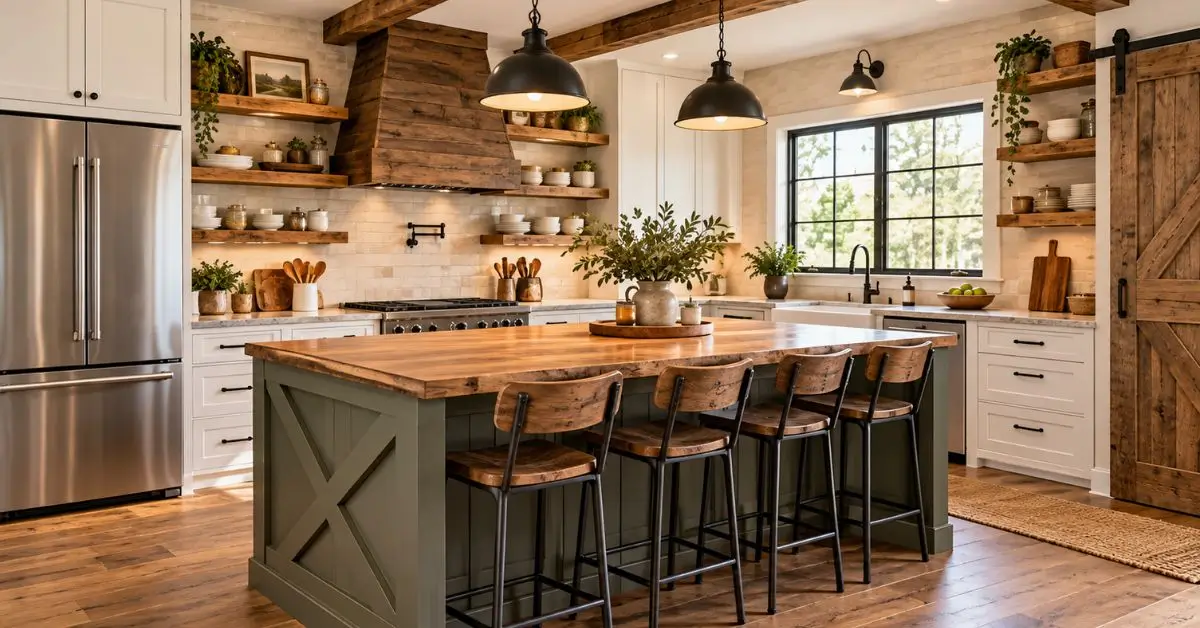
Farmhouse Modern Rustic Kitchen
Cooking and gathering in a kitchen that feels cold, clinical, or outdated can make daily meal preparation feel like a chore. For years, kitchen trends pushed stark all-white cabinets, cold gray marble, and shiny chrome fixtures. While this look appeared clean in magazines, it often left real homes feeling sterile, uninviting, and difficult to keep clean. Conversely, older traditional country kitchens often feel too dark, cluttered, and heavy for modern daily life.
Learning how to blend contemporary convenience with cozy rustic textures solves this remodeling puzzle. Creating a warm and functional kitchen does not require an unlimited budget or a historic countryside estate. When you know how to balance sleek appliances, durable quartz countertops, warm organic woods, and vintage brass accents, you can design a space that feels fresh, comfortable, and timeless.
In this comprehensive guide, you will discover the core principles of modern rustic styling, how to pair cabinets with stone surfaces, practical layout rules for smooth cooking, and realistic ways to remodel your kitchen on any budget.
A farmhouse modern rustic kitchen is an interior design style that blends traditional farmhouse charm, natural weathered textures, and contemporary functionality. It combines clean cabinetry, modern high-efficiency appliances, and quartz surfaces with organic elements like reclaimed wood beams, apron-front sinks, warm earthy colors, and vintage metal accents to create an inviting, practical cooking space.
Quick Summary
Modern rustic farmhouse kitchens balance clean lines with natural warmth. Pair neutral shaker cabinets with a reclaimed wood island, install durable quartz or soapstone countertops, and anchor the room with an apron-front fireclay sink. Layer your lighting across three levels and choose warm 2700K bulbs to create an inviting gathering space for family and friends.
The Core Philosophy of Modern Rustic Farmhouse Design
The kitchen is the true heart of the home. It is where morning coffee is brewed, children finish homework, and friends gather during weekend dinners. Because this room sees so much daily activity, it must be practical and easy to maintain while offering visual comfort.
Designing a farmhouse modern rustic kitchen is about striking a delicate balance between old-world character and modern convenience. It takes the best parts of rural craftsmanship, such as thick timber beams, tongue-and-groove paneling, and handcrafted pottery, and pairs them with high-performance induction cooktops, quiet dishwashers, and streamlined storage systems.
This design style avoids mass-produced plastic finishes and disposable trends. Instead, it celebrates natural materials that develop a rich patina over time. Knots in solid wood, subtle variations in handmade ceramic tiles, and the gentle aging of unlacquered brass hardware give the space an authentic, collected-over-time personality that never goes out of style.
Cabinetry Styles and Two-Tone Color Palettes
Cabinets occupy the largest visual area in any kitchen and establish the room’s overall mood. In a modern rustic setting, cabinet doors should feature clean, simple profiles rather than fussy decorative moldings.
When planning cabinetry for a farmhouse modern rustic kitchen, consider these proven styling combinations:
Cabinet Design Strategy
├── 1. Shaker-Style Perimeter Doors (Timeless flat-panel frames)
├── 2. Two-Tone Island Contrast (Natural wood island with painted perimeter)
├── 3. Integrated Storage Solutions (Pull-out spice racks & hidden trash bins)
└── 4. Targeted Open Shelving (Thick reclaimed wood slabs for daily dishes)
The Power of Two-Tone Cabinets
One of the most effective ways to add depth to your kitchen is using two different cabinet finishes. Paint your perimeter wall cabinets in a soft, warm neutral like creamy linen, pale mushroom, or muted sage green. Then, build your center kitchen island using natural stained white oak, walnut, or reclaimed pine.
This two-tone approach grounds the center of the room and highlights the beauty of natural wood grain without making the entire kitchen feel dark.
Balancing Open Shelves and Closed Storage
While floating wood shelves look beautiful in photographs, having open shelving everywhere can lead to messy, dusty dishes. A smart compromise is keeping 80 percent of your storage behind solid shaker cabinet doors while dedicating one small wall section to thick, rough-sawn wood floating shelves. Use these open shelves to display your everyday white ceramic plates, clear glassware, and wooden cutting boards.
Durable Countertop Pairings: Quartz, Soapstone, and Butcher Block
Kitchen countertops must withstand hot pots, sharp knives, red wine spills, and daily scrubbing. Choosing the right surface material requires balancing maintenance requirements with rustic beauty.
Here is how popular countertop materials perform in a modern rustic setting:
Engineered Quartz Surfaces
Quartz is the most practical countertop choice for busy families. Made from crushed natural stone combined with durable polymer resins, quartz is non-porous. It resists staining from coffee and citrus, never requires chemical sealing, and wipes clean with warm soapy water. Look for quartz designs featuring soft warm white backgrounds with subtle, delicate gray or gold veining.
Natural Soapstone
Soapstone is a classic architectural stone with a silky, matte texture. It is naturally non-porous, chemically inert, and completely heat-resistant, meaning you can place hot cast-iron pans directly on the surface without burning it. Over time, soapstone naturally darkens from a soft charcoal gray to a deep rich black, giving your kitchen an authentic historic appearance.
Hardwood Butcher Block Accents
While installing wooden countertops around a wet sink can lead to moisture damage if neglected, using a thick end-grain butcher block slab on a dedicated baking station or kitchen island end adds organic warmth. Treat the wood regularly with food-grade mineral oil or beeswax to protect the grain and keep it water-resistant.
Style Comparison: Traditional, Cold Modern, and Modern Rustic
The table below outlines the specific design elements that define a farmhouse modern rustic kitchen compared to other popular kitchen styles:
| Kitchen Design Element | Traditional Country Farmhouse | Cold Modern Farmhouse | Modern Rustic Farmhouse |
|---|---|---|---|
| Perimeter Cabinet Finish | Ornate distressed wood or stark white | Pure bright white with high gloss | Warm cream, soft mushroom, or muted sage |
| Kitchen Island Style | Matching painted wood with turned legs | Black metal base with flat panels | Natural white oak or reclaimed barn timber |
| Countertop Selection | High-gloss speckled granite | Cold white marble with heavy gray veins | Matte quartz, honed soapstone, or butcher block |
| Backsplash Treatment | Small 4×4 ceramic tiles with dark grout | Standard flat white subway tiles | Handcrafted zellige tiles or exposed brick |
| Plumbing Fixtures | Heavy ornate chrome or bronze faucets | Industrial black pull-down commercial faucets | Unlacquered brass or bridge faucets |
| Ceiling Architecture | Standard flat painted drywall | White painted horizontal shiplap | Exposed rough-sawn structural wood beams |
| Lighting Temperature | 2700K warm incandescent glow | 4000K to 5000K clinical white LED | 2700K to 3000K warm ambient illumination |
Sinks and Architectural Details: Fireclay and Reclaimed Timber
Architectural features provide the structural soul of a kitchen. If your home has basic drywall ceilings and standard builder-grade windows, adding targeted architectural accents creates instant historic depth.
An essential architectural focal point in a farmhouse modern rustic kitchen is the classic apron-front sink:
Architectural Accent Roadmap
├── 1. Apron-Front Sink (Heavy fireclay or hammered natural copper)
├── 2. Rough-Hewn Ceiling Beams (Exposed cedar, oak, or faux timber)
├── 3. Textured Backsplash (Handmade zellige or limewashed brick)
└── 4. Custom Range Hood (Wood-wrapped box or plaster-finished hood)
The Apron-Front Fireclay Sink
A deep, single-basin apron-front sink (often called a Belfast or farmhouse sink) is both practical and beautiful. Made from clay fired at extremely high temperatures, fireclay resists scratching, chipping, and staining. The deep basin allows you to wash large roasting pans, stockpots, and baking sheets easily without splashing water across your counters.
Exposed Ceiling Beams
Installing rough-sawn cedar or reclaimed oak beams across your kitchen ceiling draws the eye upward and makes the space feel grounded. If structural timber is too heavy for your ceiling framing, lightweight hollow box beams made from real wood planks provide the exact same visual warmth while being simple to install with standard wood screws.
Handcrafted Zellige Backsplashes
Instead of using flat, mass-produced ceramic subway tile, choose handcrafted Moroccan zellige tiles. Each zellige tile is individually molded and fired, creating subtle variations in surface texture, glaze thickness, and color tone. When sunlight hits the wall, these natural imperfections reflect light softly, adding rich texture behind your stove and sink.
Real-World Case Study: An $8,500 Kitchen Refresh
You do not need to spend $50,000 on a complete gut renovation to achieve a stunning modern rustic look. Strategic DIY updates and smart material choices allow homeowners to transform an outdated space on a sensible budget.
Applying the principles of a farmhouse modern rustic kitchen on a realistic budget produces remarkable visual and functional improvements.
Consider this realistic US example: A family in Nashville, Tennessee had an outdated 1990s kitchen with honey-oak cabinets, laminate countertops, and a noisy fluorescent ceiling light. The homeowners established a strict $8,500 total remodeling budget.
Here is how they allocated their funds:
- Cabinet Paint and Supplies ($320 DIY): Cleaned, primed, and painted perimeter cabinets in a warm off-white satin enamel paint.
- Reclaimed Wood Island Wrap ($450 DIY): Wrapped the existing drywall kitchen island base in weathered white oak tongue-and-groove boards.
- Pre-Fabricated Quartz Countertops ($2,800 installed): Installed warm white quartz with subtle taupe veining, including sink cutout.
- Fireclay Apron-Front Sink and Bridge Faucet ($780): Deep 33-inch white fireclay sink paired with an unlacquered brass bridge faucet.
- Handcrafted Ceramic Backsplash ($650 DIY): Installed textured off-white ceramic tiles with warm gray stain-resistant grout.
- Lighting and Electrical Upgrades ($950): Replaced fluorescent box with four recessed LED ceiling lights and two matte black cone pendants.
- Solid Brass Hardware ($280): Installed thirty solid brass bar pulls and bin cups on drawers.
- Stainless Steel Energy Star Dishwasher ($750): Replaced old noisy unit with a quiet 44-decibel stainless dishwasher.
- Contingency Supplies & Tool Rentals ($1,370): Covered tile saws, plumbing fittings, painter tape, and local sales taxes.
Total project expenditure equaled exactly $8,350. In three weeks of targeted work, the family transformed an outdated, generic kitchen into a bright, warm gathering space while increasing their home’s appraised market value by an estimated $18,000.
The Three-Tier Lighting System and Hardware Selection
Lighting is what turns a daytime cooking space into a cozy evening gathering room. Relying entirely on a single bright ceiling fixture creates harsh shadows directly over your cutting boards and countertops.
Layering your lighting in a farmhouse modern rustic kitchen ensures balanced illumination across three distinct levels:
Kitchen Lighting Architecture
├── 1. Task Lighting (Under-cabinet LED strips & focused island pendants)
├── 2. Ambient Lighting (Dimmable recessed ceiling LED pots)
└── 3. Accent Lighting (Sconces over sink & open shelf puck lights)
1. Functional Task Lighting
Task lighting focuses bright, shadow-free light directly onto work surfaces. Install continuous warm LED light strips underneath upper wall cabinets to illuminate your food prep zones. Hang two or three pendant lights 30 to 36 inches above your kitchen island to provide direct light for cooking and dining.
2. Ambient Ceiling Lighting
Ambient lighting provides general room visibility. Space recessed ceiling lights four to five feet apart across the entire kitchen ceiling. Always install dimmer switches so you can adjust brightness levels from bright morning cooking mode down to relaxed evening mood lighting.
3. Decorative Accent Sconces
Mount an articulating brass or matte black wall sconce directly above your farmhouse sink or open floating shelves. This architectural detail provides focused light for dishwashing while adding vintage character to the wall. Always choose warm white LED bulbs rated between 2700K and 3000K to keep the kitchen feeling cozy.
Flooring, Layout Flow, and Ergonomics
A beautiful kitchen must also be comfortable to work in. Flooring needs to be gentle on your feet during long cooking sessions while standing up to dropped pots, water drips, and pet claws.
Choosing the Right Flooring
- Wide-Plank Engineered White Oak: Engineered hardwood features a real wood top layer over structural plywood, making it far more stable than solid wood in areas with humidity changes. A matte polyurethane finish protects the wood from water spills while showcasing natural grain patterns.
- Luxury Vinyl Plank (LVP): For busy households with young children and pets, high-grade waterproof LVP offers the realistic look of textured oak while being 100 percent impervious to water damage and scratches.
- Natural Slate or Brick Pavers: Laying natural slate tile or antique brick pavers in a herringbone pattern creates an indestructible, historic floor that hides dirt and adds immense rustic texture.
Maintaining the Kitchen Work Triangle
Ensure your kitchen layout follows the classic work triangle rule. The total walking distance between your refrigerator (storage), sink (cleaning), and cooktop (cooking) should measure between 12 and 26 feet. Keep primary walking paths at least 36 to 42 inches wide so two cooks can work together comfortably without blocking cabinet doors.
Common Design Mistakes to Avoid
Avoiding typical remodeling mistakes will save you time, money, and frustration when setting up your kitchen.
1. Overusing Fake Distressed Finishes
Faux-distressed furniture with machine-made gouges and sanded edges often looks artificial. Instead of buying fake distressed pieces, let authentic materials like solid wood and unlacquered brass age naturally through daily use.
2. Sacrificing Closed Storage for Aesthetics
Covering every wall with open shelving looks great on social media, but it leaves you with nowhere to hide plastic food containers, small appliances, and cereal boxes. Always preserve ample closed cabinet storage for everyday clutter.
3. Ignoring Proper Ventilation Capacity
High-heat searing and cooking generates airborne grease, smoke, and moisture. Ensure your range hood has an airflow rating of at least 300 to 600 CFM (cubic feet per minute) and vents outside through an exterior wall rather than simply recirculating air back into the kitchen.
Conclusion
Remodeling your kitchen into a welcoming, functional gathering place is one of the most rewarding home improvement projects you can take on. Creating a farmhouse modern rustic kitchen gives your home a warm, timeless foundation that supports daily family routines and makes entertaining effortless.
By balancing clean shaker cabinets with rich natural wood grains, installing durable quartz surfaces, anchoring the room with a fireclay apron-front sink, and layering warm lighting, you can build a kitchen that brings daily joy to your family for decades to come.
Reviewing your kitchen workflow, inspecting cabinet hardware, and refreshing decorative accents every few seasons ensures your space remains clean, organized, and inspiring all year long.
If you found this kitchen design guide helpful, share it with fellow homeowners and explore our other interior styling resources to keep discovering practical home improvement inspiration.
Frequently Asked Questions
What is a farmhouse modern rustic kitchen?
A farmhouse modern rustic kitchen combines traditional farmhouse elements with modern design and functionality. Common features include shaker cabinets, natural wood, quartz countertops, and warm earthy colors.
What paint colors work best for modern rustic kitchen cabinets?
Warm neutrals such as off-white, cream, taupe, mushroom, and muted sage work well for modern rustic kitchen cabinets. These colors complement natural wood and create a warm, inviting look.
Is an apron-front farmhouse sink practical for everyday use?
Yes, an apron-front farmhouse sink is practical for everyday use because its deep basin can hold large pots, pans, and baking dishes. Its design also allows you to stand closer to the sink while working.
How do you mix wood finishes in a rustic kitchen?
Choose one dominant wood tone and use a second finish as an accent to create a balanced look. Keeping the wood tones within a similar warm color range helps prevent the kitchen from looking mismatched.
What countertop material requires the least maintenance in a rustic kitchen?
Engineered quartz is one of the lowest-maintenance countertop options for a rustic kitchen. It is non-porous, resists stains, and can usually be cleaned with mild soap and water.