

Introduction
Walking into a living room that feels cold, sterile, or overly staged makes it hard to truly relax. In recent years, many people decorated their homes using stark white walls, cold gray floors, and mass-produced signs. While this look was popular for a time, it often left living spaces feeling flat, unwelcoming, and disconnected from the natural comfort that a home should provide.
Learning how to balance authentic rustic charm with cozy warmth solves this decorating challenge. A welcoming home does not require an enormous budget or an old country cottage. When you understand how to layer natural wood finishes, choose warm earthy colors, and arrange comfortable seating, you can create a relaxing gathering space for family and friends.
In this practical guide, you will discover the foundational design rules for creating an inviting living area, how to choose durable furniture, practical ways to add architectural character, and how to style your space on a budget.
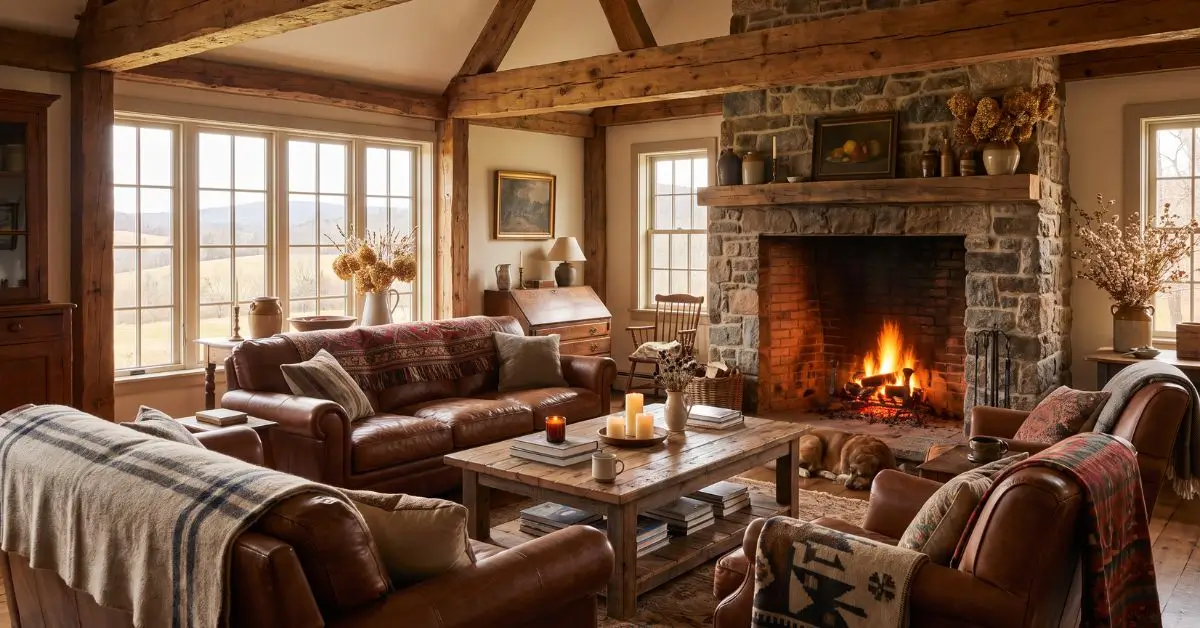
A rustic warm farmhouse living room is an interior design style that blends natural architectural elements, weathered wooden furniture, and vintage accents with cozy, warm-toned textiles. It emphasizes organic textures, earth-toned color palettes, comfortable upholstered seating, and layered lighting to create an inviting, relaxed gathering space that feels timeless, authentic, and connected to rural craftsmanship.
Quick Summary
Creating an authentic, cozy living space means choosing warm undertones over stark clinical whites. Layer rich natural woods like oak and pine with textured fabrics like wool, linen, and leather. Anchor your seating around a stone or brick focal point, incorporate vintage architectural pieces, and use warm 2700K lighting to create an inviting evening glow.
Moving Beyond Sterile Decor: The Shift Toward True Warmth
For years, the modern farmhouse look relied heavily on cold gray paint, shiny metal accents, and bright white shiplap. While clean, this approach often removed the authentic history and coziness that made traditional farmhouses so appealing in the first place.
Today, homeowners are moving toward a richer, more grounded aesthetic. Designing a rustic warm farmhouse living room is all about embracing natural imperfections. It celebrates knots in wooden floorboards, the patina on aged brass hardware, and the soft wrinkles of washed linen slipcovers.
This design philosophy creates spaces that feel collected over time rather than purchased from a single catalog. It prioritizes comfort and durability, ensuring that you never have to worry about guests putting their feet up on the coffee table or pets curling up on the sofa.
The Warm Farmhouse Color Palette: Creams, Earth Tones, and Deep Accents
Color sets the emotional foundation for any interior space. If your walls are painted in cool, blue-based whites, the room will always feel chilly regardless of how many blankets you add.
To build an authentic palette for a rustic warm farmhouse living room, apply the proven 60-30-10 design formula:
Color Distribution Framework
├── 60% Dominant Base (Warm cream, oatmeal, pale biscuit, soft taupe)
├── 30% Secondary Tones (Caramel leather, warm oak, sage green, terracotta)
└── 10% Deep Accent Spark (Aged iron, antique bronze, forest green, deep red)
The 60 Percent Base: Soft Warm Neutrals
Choose wall colors with creamy yellow, beige, or red undertones. Shades like warm linen, soft oatmeal, and creamy alabaster reflect natural sunlight beautifully during the day and glow softly under lamp light at night.
The 30 Percent Secondary: Natural Woods and Earth Tones
This portion of your room brings the outdoors inside. It includes natural honey oak flooring, exposed cedar beams, tan leather armchairs, and warm olive or sage green curtains. These shades add visual weight and prevent large rooms from feeling empty.
The 10 Percent Accents: Grounding Metals and Rich Hues
Small doses of deep colors ground the space and provide necessary contrast. Matte black iron curtain rods, oil-rubbed bronze cabinet pulls, dark walnut picture frames, and rich plaid wool pillows give the eyes a place to rest.
Essential Furniture Pieces and Layout Flow
Furniture in a farmhouse setting should be sturdy, practical, and deeply comfortable. Avoid fragile pieces with delicate legs or stiff, formal upholstery that discourages everyday use.
Arranging furniture in a rustic warm farmhouse living room requires balancing open walkways with intimate conversation areas:
- Deep-Seated Slipcovered Sofas: A neutral slipcovered sofa in washed cotton or linen is the ultimate anchor piece. Slipcovers are practical for busy families because they can be removed and washed easily, maintaining a fresh and clean appearance.
- Worn Leather Club Chairs: Adding a pair of caramel or saddle-brown leather armchairs introduces rich color and a smooth, durable texture that looks better as it ages and develops natural creases.
- Reclaimed Wood Coffee Tables: Look for coffee tables made from salvaged barn wood, old factory floorboards, or thick pine planks. Visible saw marks, nail holes, and natural wood grain give the room immediate character.
- Antique Storage Cabinets: Incorporate vintage storage pieces, such as an old apothecary chest, a rustic pine armoire, or open wooden bookshelves, to hide television equipment and board games.
When arranging your seating, leave at least 30 to 36 inches of space for main walking paths. Keep your coffee table roughly 14 to 18 inches away from the sofa so you can set down a drink comfortably without crowding your legs.
Design Comparison: Cold Modern vs. Rustic Warm Farmhouse
The table below highlights the distinct differences between older, cold farmhouse trends and the inviting, authentic approach used in a rustic warm farmhouse living room:
| Design Element | Cold Modern Farmhouse Trend | Rustic Warm Farmhouse Approach |
|---|---|---|
| Primary Wall Color | Stark clinical white or cold blue-gray | Creamy oatmeal, soft linen, and warm taupe |
| Wood Finishes | Gray-washed or heavily bleached timber | Warm honey oak, natural pine, and rich walnut |
| Upholstery Style | Stiff polyester fabrics in cool gray | Washed linen, soft cotton duck, and saddle leather |
| Metal Hardware | High-shine chrome or painted flat black | Hand-forged iron, antique brass, and patinated bronze |
| Architectural Accents | Thin white painted shiplap boards | Reclaimed ceiling beams and textured stone mantels |
| Textile Textures | Flat synthetic printed fabrics | Chunky wool knits, woven jute, and vintage quilts |
| Lighting Temperature | Cool daylight bulbs (4000K to 5000K) | Warm amber glow bulbs (2700K) |
Architectural Details: Beams, Fireplaces, and Wall Treatments
Architectural features give a room soul and structural interest. If your home has basic drywall and standard flat ceilings, adding a few targeted architectural details can completely transform its atmosphere.
To bring authentic architectural character into a rustic warm farmhouse living room, consider these high-impact projects:
Architectural Character Roadmap
├── 1. Ceiling Beams (Exposed rough-sawn cedar or faux box beams)
├── 2. Natural Stone Fireplace (Stacked fieldstone or limewashed brick)
├── 3. Wood Wall Treatments (Vertical tongue-and-groove or beadboard)
└── 4. Historic Trim Work (Chunky window casing and wide baseboards)
Reclaimed Ceiling Beams
Installing rough-sawn wooden beams across your ceiling draws the eye upward and makes tall rooms feel cozier. If structural timber is too heavy or expensive, lightweight faux wood box beams made from cedar or high-density polyurethane look authentic while being easy to install with standard screws.
The Stone or Brick Fireplace
The fireplace is the natural heart of any gathering space. If you have an outdated brick fireplace, consider applying a soft lime wash instead of solid latex paint. Lime wash allows the natural texture of the brick to show through while softening harsh orange tones. Top the fireplace with a thick, rough-cut timber mantel to display framed art and brass candlesticks.
Vertical Tongue-and-Groove Paneling
Instead of standard horizontal shiplap, try installing vertical tongue-and-groove paneling or classic beadboard. Vertical lines make standard eight-foot ceilings feel taller while adding subtle, historic texture to accent walls or reading nooks.
Real-World Case Study: A $1,500 Living Room Transformation
You do not need to spend tens of thousands of dollars to create a cozy, character-filled living space. Strategic DIY updates and smart secondhand shopping allow you to stretch your decorating budget effectively.
Applying the principles of a rustic warm farmhouse living room on a budget delivers impressive visual results.
Consider this realistic US example: A family living in a suburban home in Nashville, Tennessee wanted to update their cold, gray builder-grade living room on a strict $1,500 total budget.
Here is how they allocated their funds:
- Warm Wall Paint ($120): Three gallons of creamy warm-linen satin paint to replace cold gray walls.
- DIY Ceiling Beams ($280): Built three faux ceiling box beams using one-by-six rough cedar boards stained in a warm honey pine finish.
- Thrifted Oak Coffee Table ($150): Purchased a solid oak coffee table from a local consignment shop, sanded off the old orange lacquer, and sealed it with a natural matte wax.
- Layered Rugs and Textiles ($450): An 8×10 natural woven jute rug paired with an antique-style printed wool runner, four linen pillow covers, and a chunky knit cotton throw.
- Lighting Upgrades ($180): Two thrifted ceramic table lamps fitted with new linen drum shades and warm 2700K LED Edison bulbs.
- Vintage Accents and Greenery ($140): Stoneware crocks, antique brass candlesticks, and two potted Boston ferns.
- Contingency Reserve ($180): Covered hardware, screws, painter tape, and local sales tax.
In a single week of targeted work, the family turned a sterile, uninspired room into a warm, inviting retreat while staying completely within their $1,500 budget limit.
Layering Textures and Soft Textiles for Coziness
Texture is what makes a room feel tactile and welcoming. When you combine smooth wood, rough stone, nubby wool, and soft leather, the room feels visually rich even if your color palette is completely neutral.
A crucial styling step for a rustic warm farmhouse living room involves layering textiles across every surface:
- Layered Area Rugs: Start with a large, durable base rug made from natural woven jute or sisal. Place a smaller, soft wool rug featuring a muted vintage floral or geometric pattern on top of the jute base. This gives your feet a soft place to land while framing your seating zone.
- Drapes That Kiss the Floor: Hang curtains high and wide above your window frames to make windows appear larger. Choose textured fabrics like heavy linen, cotton canvas, or subtle ticking stripes in warm cream or oatmeal tones.
- Pillows with Feather Inserts: Ditch stiff polyester pillow inserts in favor of soft feather or down-alternative fills that can be fluffed and shaped. Mix subtle patterns, such as a small grid check with a muted floral print and a solid textured weave.
- Quilts and Chunky Throws: Keep extra blankets within easy reach. Fold a vintage patchwork quilt or a waffle-weave wool blanket over the back of an armchair or store them in a woven seagrass basket next to the couch.
The Three-Tier Lighting System for Warm Evenings
Lighting is one of the most critical elements in setting a cozy mood. If you rely entirely on bright overhead recessed can lights, your living room will feel like an office building after sunset.
To create a relaxing ambiance in your rustic warm farmhouse living room, layer your lighting across three distinct levels:
Warm Lighting Architecture
├── 1. Ambient Level (Iron wagon wheel chandelier, dimmable fixtures)
├── 2. Task Level (Adjustable brass reading lamps near armchairs)
└── 3. Accent Level (Ceramic table lamps on consoles, pillar candles)
Ambient Overhead Light
Choose an overhead fixture that fits the scale of your room. An open iron wagon wheel chandelier or a rustic wooden pendant light provides general illumination. Always install dimmer switches so you can lower the light levels when watching movies or relaxing in the evening.
Functional Task Lighting
Place focused reading lamps next to armchairs and reading corners. Articulated brass pharmacy floor lamps or swing-arm wall sconces provide clean light for reading without flooding the entire room with brightness.
Cozy Accent Lighting
Small table lamps placed on side tables, mantels, and entry consoles create warm pockets of light around the perimeter of the room. Always use LED bulbs rated at 2700K (warm white) with a high Color Rendering Index (CRI of 90+) to ensure wood tones and fabrics look natural and rich.
Curating Vintage Accents and Natural Elements
The finishing touches give a room its unique personality. Avoid buying complete sets of mass-produced decorative knick-knacks. Instead, take your time hunting for unique vintage pieces that have authentic history and charm.
Incorporate these classic decorative accents into your styling:
- Antique Stoneware Crocks: Use vintage clay crocks to hold firewood kindling, rolled blankets, or tall branches clipped from your backyard.
- Landscape Oil Paintings: Hang framed landscape paintings featuring rolling hills, pastoral farmlands, or quiet forests. Look for vintage gold-leaf or dark wood frames with natural wear.
- Handcrafted Ceramic Bowls: Place a large stoneware bowl on your coffee table to hold seasonal fruit, pinecones, or wooden decorative beads.
- Live Greenery and Dried Botanicals: Bring life into the space with easy-care houseplants like snake plants, fiddle leaf figs, or trailing pothos in terracotta pots. Dried eucalyptus and wheat sheaves add natural texture that lasts all year.
Common Decorating Mistakes to Avoid
Avoiding typical design traps will save you time, money, and frustration when setting up your living room.
Overusing Word Art and Slogan Signs
Mass-produced wooden signs with words like “Farmhouse”, “Gather”, or “Blessed” can quickly make a room feel commercial and dated. Let your natural materials, comfortable seating, and warm lighting communicate hospitality without needing signs to announce it.
Buying Matching Furniture Showroom Sets
Purchasing an identical sofa, loveseat, coffee table, and end table set makes a room look flat and generic. Mix different wood finishes, metal tones, and upholstery textures to give your home an organic, curated appearance.
Hanging Curtains Too Low and Narrow
Mounting curtain rods right against the top of the window frame blocks natural sunlight and makes ceilings feel low. Mount your curtain rod 6 to 12 inches above the window frame and extend it 8 inches past each side so drapes frame the window without covering the glass.
Choosing Cold Lighting Temperatures
Cool white and daylight bulbs (4000K to 5000K) create a harsh, blue tint that ruins the warmth of wood finishes and earthy paint colors. Always stick to warm white 2700K bulbs for residential living areas.
Conclusion
Designing a welcoming, beautiful home is an ongoing journey of creativity and thoughtful curation. Creating a rustic warm farmhouse living room provides your family with a peaceful, grounding sanctuary that celebrates natural materials, everyday comfort, and timeless rural charm.
By establishing a warm neutral color palette, investing in sturdy and comfortable seating, highlighting architectural character with wood and stone, and layering soft lighting, you can build a living space that feels welcoming to everyone who enters.
Revisiting your rustic warm farmhouse living room styling with every season allows you to make small, affordable adjustments that keep your living space fresh, functional, and inspiring all year long.
If you found this interior decorating guide helpful, share it with your friends and family, and explore our other home decor resources to discover more creative room design inspiration.
Frequently Asked Questions
How do you make a farmhouse living room feel warm and cozy?
Use creamy wall colors, honey-toned wood, wool or linen textiles, leather seating, textured rugs, and warm 2700K lighting. Add vintage decor and comfortable furniture for a lived-in feel.
What is the difference between rustic farmhouse and modern farmhouse?
Rustic farmhouse uses weathered wood, raw materials, antiques, and earthy colors. Modern farmhouse uses cleaner lines, white walls, black metal accents, and contemporary lighting.
What paint colors work best for a rustic warm farmhouse living room?
Choose warm creamy white, beige, muted sage green, or warm taupe. Avoid cool whites and blue-gray tones, which can make the room feel cold.
How can I decorate a rustic farmhouse living room on a budget?
Thrift solid-wood furniture, repaint walls in warm cream, add jute rugs, and replace pillow covers. DIY wood accents can also add farmhouse character at low cost.
What kind of rug is best for a rustic farmhouse living room?
Choose a natural jute or sisal rug for durability, then layer a soft vintage-style wool rug over it for added warmth, texture, and comfort.
[…] a bathroom is different from styling a bedroom or living room. Every time someone takes a hot shower, the room fills with warm steam, raising relative humidity […]