

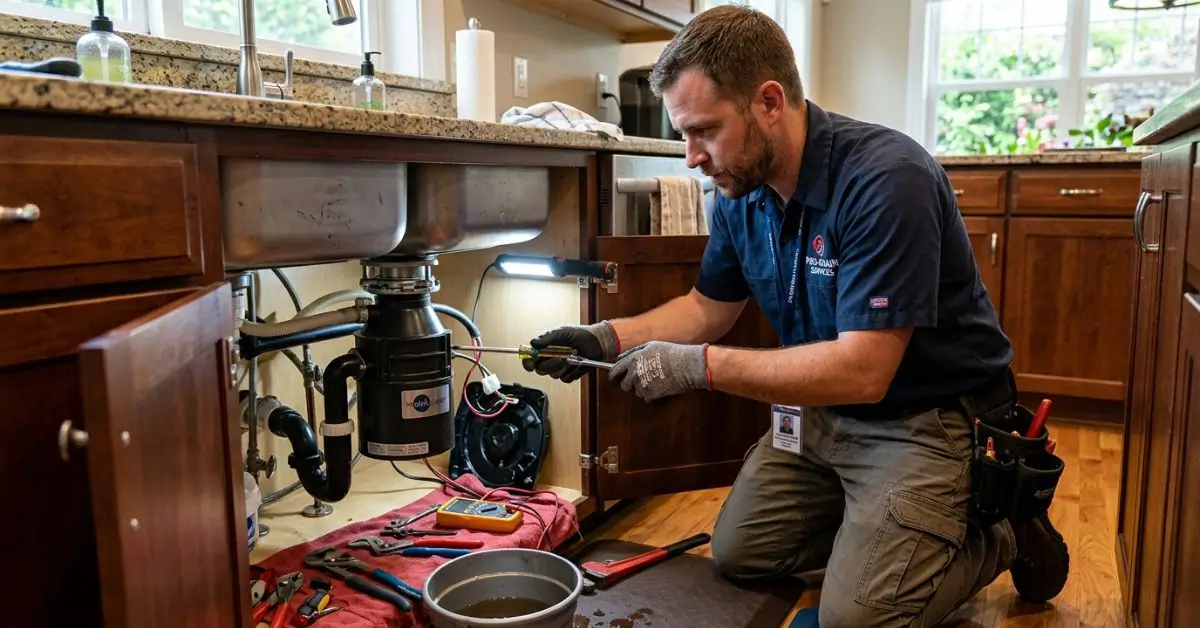
Garbage Disposal Repair
Your garbage disposal stops working in the middle of washing dishes. Maybe it hums but won’t spin. Maybe it leaks under the sink. Maybe it just clicks and goes completely silent. Whatever the symptom, the frustration is the same — and the first question most people ask is: can I fix this myself, or do I need a plumber?
The honest answer is: most common disposal problems are fixable without professional help. But knowing which problem you’re dealing with makes all the difference.
This guide walks you through the most frequent issues, how to diagnose them, and exactly what to do — including when it genuinely makes more sense to call someone in.
What Is Garbage Disposal Repair?
Garbage disposal repair refers to diagnosing and fixing problems with the electric food waste unit installed under your kitchen sink. These units grind food scraps into small particles that drain through your plumbing. Repairs typically involve clearing jams, resetting electrical components, fixing leaks, or replacing worn parts — ranging from simple resets you can do in minutes to more involved fixes requiring basic tools.
Quick Summary
Most disposal problems — jams, humming, tripped resets — are DIY-friendly. Leaks and electrical issues depend on where the problem is. Complete unit failure usually means replacement. This guide covers all of it.
Start Here: Diagnose Before You Do Anything
Before grabbing tools, figure out what’s actually happening. The symptom tells you almost everything you need to know about the fix.
Ask yourself:
- Does it make any sound at all when switched on?
- Does it hum but not grind?
- Is water leaking under the sink?
- Does it work but drain slowly?
- Does it make a rattling or grinding noise?
Each of these points to a different problem — and a different solution. Let’s go through them one by one.
Problem 1: Disposal Won’t Turn On At All
No sound, no response — nothing happens when you flip the switch.
This is almost always an electrical issue, and the fix is usually simple.
Step 1 — Check the reset button. Look at the bottom of the disposal unit under the sink. There’s a small red or black button. If it’s popped out, the unit tripped its built-in overload protector. Press it firmly until you feel a click, then try the switch again.
Step 2 — Check your circuit breaker. If the reset button didn’t help, go to your electrical panel. Find the breaker labeled for the kitchen or disposal and check if it tripped. Reset it if needed.
Step 3 — Check the wall switch. If both the reset and breaker are fine, the wall switch itself may be faulty. This is a quick fix for an electrician or handy homeowner comfortable with basic wiring.
Most cases of a completely dead disposal are solved at Step 1. It costs nothing and takes less than two minutes.
Problem 2: Disposal Hums But Doesn’t Grind
You hear a low hum when you switch it on — but no grinding action.
This means the motor is getting power but the grinding plate is stuck. A jam is the most likely cause.
Important: Switch the unit off immediately. Running a jammed disposal for more than a few seconds can burn out the motor.
How to fix a jam:
- Turn off the power at the switch — or unplug the unit under the sink if accessible.
- Look at the bottom center of the unit. There’s a small hex socket (usually fits a 1/4-inch Allen wrench).
- Insert the wrench and work it back and forth. You’ll feel resistance, then it should loosen as the jam clears.
- Use disposal tongs or pliers — never your hand — to remove any debris from inside the unit.
- Press the reset button, restore power, run cold water, and test.
Most jams are caused by bones, fruit pits, fibrous vegetables, or a small utensil that slipped in. Once cleared, the unit runs normally.
Problem 3: Disposal Leaks Under the Sink
Leaks are one of the more common issues — and the fix depends entirely on where the leak is coming from.
Leak from the top (sink flange): The mounting seal between the disposal and sink has worn out or loosened. You’ll need to reseal the flange with plumber’s putty or tighten the mounting bolts. This is a moderate DIY job.
Leak from the side (drain connections): The dishwasher hose or drain pipe connection has a loose clamp or worn gasket. Tighten the clamp or replace the gasket — straightforward fix.
Leak from the bottom: This usually means the internal seal inside the motor housing has failed. In most cases, this isn’t worth repairing — replacement is the more practical option.
A realistic US example: A homeowner in Chicago notices water pooling under the sink after running the disposal. They trace it to the side drain connection — a loose clamp. Five minutes with a screwdriver and the leak is gone. Total cost: $0.
Problem 4: Disposal Drains Slowly
Water backs up or drains sluggishly after running the unit.
This is almost always a clog in the drain line — not the disposal itself.
Run cold water and let it flush through for 30–60 seconds while the unit runs. If that doesn’t clear it, the blockage is likely further down the drain pipe.
You can try a drain cleaning solution safe for disposals, or use a sink plunger on the drain. Avoid chemical drain cleaners — they can damage the internal components and the pipes over time.
If the slow drain persists, the clog may be deeper in the pipe system, which is when a plumber becomes the practical choice.
Problem 5: Strange Noises — Rattling or Grinding Metal
The unit runs but makes an unusual clanking or metallic grinding sound.
Something hard is inside the grinding chamber — a small bone fragment, a bottle cap, a piece of glass, or a utensil.
Turn off the unit immediately. Use tongs or long-nose pliers to carefully feel inside and remove any foreign object. Never use your hand inside the chamber, even when the power is off.
If the noise continues after removing debris, the grinding ring or impellers may be damaged. At that point, it’s worth getting a professional opinion on whether repair or replacement makes more sense.
DIY vs. Calling a Plumber: How to Decide
Not every repair is worth attempting yourself. Here’s a straightforward breakdown:
| Problem | DIY Friendly? | When to Call a Pro |
|---|---|---|
| Unit won’t turn on | Yes — reset button or breaker | If wiring is involved |
| Jammed disposal | Yes — Allen wrench fix | If jam won’t clear after two attempts |
| Leak from side connection | Yes — clamp or gasket | If leak source is unclear |
| Leak from bottom | No | Always — internal seal failure |
| Slow drain | Usually yes | If clog is deep in the pipe |
| Strange noises | Yes — remove debris | If noise continues after clearing |
| Complete unit failure | No | Replacement recommended |
This table helps you make a quick, honest call before spending time or money on the wrong approach.
What Does Garbage Disposal Repair Cost?
Cost varies based on the problem and whether you hire a professional.
- DIY reset or jam fix: Free — just your time
- Replacing a gasket or clamp: $5–$15 in parts
- Professional plumber visit: $100–$250 depending on location and complexity
- Full unit replacement (professional): $200–$500 including parts and labor
- New disposal unit only: $80–$300 depending on brand and capacity
In most US cities, a straightforward service call runs around $150. If the repair cost approaches the price of a new unit, replacement usually makes more financial sense — especially if the unit is more than 8–10 years old.
When Replacement Makes More Sense Than Repair
Sometimes the honest answer is that repair isn’t worth it. Consider replacing the unit if:
- It’s older than 10 years and problems are recurring
- The motor has burned out
- There’s a leak from the bottom (internal seal failure)
- Repair costs exceed 50% of a new unit’s price
- It’s your second or third repair in the same year
Modern units are quieter, more energy-efficient, and come with warranties. Replacing an aging disposal is often the smarter long-term decision.
Frequently Asked Questions
How do I reset a garbage disposal?
Press the small reset button on the bottom of the unit firmly until you feel a click, then test it. This fixes most cases of a disposal that suddenly stops working with no obvious cause.
Why is my disposal humming but not working?
It’s almost always a jam. The motor has power but the plate can’t spin. Turn it off immediately, insert a 1/4-inch Allen wrench into the hex socket on the bottom, and work the jam loose.
Can I fix a leaking disposal myself?
It depends on where it’s leaking. Top and side leaks are DIY-friendly — tighten connections or reseal the flange. A leak from the bottom means the internal seal has failed and replacement is usually the only practical fix.
How long does a garbage disposal last?
Most units last 8 to 15 years with normal use. If yours is over 10 years old and problems keep coming back, replacement is usually more cost-effective than repeated repairs.
Is this something a beginner can fix?
Yes, for most common issues. Resets, jam clearing, and tightening connections require minimal tools and no plumbing experience. For persistent leaks, electrical faults, or motor failure — call a licensed plumber.