

Best Flushing Toilet: What Actually Makes a Toilet Flush Well
A toilet that does not flush reliably is more than an inconvenience. It is a daily source of frustration, wasted water from double flushing, and in worse cases a source of genuine hygiene problems. Yet most people buy toilets based almost entirely on price and appearance without understanding what actually determines how well a toilet flushes.
The result is a bathroom fixture that either performs exactly as expected or becomes an ongoing complaint for years. Getting it right from the start means understanding what flush performance actually depends on, not just which brand looks most impressive in a showroom.
This guide explains what makes the best flushing toilets consistently outperform average ones, how each flush technology works in practice, what to look for at different price points, and how to match a toilet’s performance characteristics to your household’s specific needs.
A best flushing toilet is one that reliably clears the bowl completely with a single flush while using water efficiently. Performance depends on flush technology, trap design, water volume, bowl geometry, and glazing quality. A high-performing toilet combines these elements to create consistent flushing power that handles waste completely without clogs or multiple flushes, regardless of use frequency or household size.
Quick Summary
The best flushing toilets combine a strong flush mechanism with well-designed bowl geometry and efficient water use. Gravity-feed, pressure-assisted, and dual-flush technologies each have distinct advantages. Key performance factors include MaP score, trap size, flush valve diameter, and bowl coating quality. Budget matters but a $300 toilet from a quality brand consistently outperforms a $500 toilet with poor engineering. Read on for the full breakdown.
Why Flush Performance Varies So Much Between Toilets
Two toilets can look identical, carry similar price tags, and come from the same manufacturer while performing completely differently. Understanding why helps you evaluate toilets based on what actually matters rather than what looks good in a specification sheet.
Flush performance comes from the interaction of several factors working together:
Water volume and pressure determines the initial force available for the flush. A toilet using 1.28 gallons per flush at high pressure clears waste more reliably than one using 1.6 gallons at low pressure. Volume matters less than how effectively that volume is used.
Flush valve diameter controls how quickly water enters the bowl at the start of the flush. A larger flush valve creates a faster, more powerful rush of water. Most quality toilets use a flush valve of three inches or larger. Toilets with two-inch flush valves, common in budget models, produce noticeably weaker flushes.
Trap design determines how waste exits the toilet. A larger, more direct trap pathway reduces the chance of clogs and improves clearance. Trap diameter is one of the most consistent predictors of long-term clog resistance.
Bowl geometry controls how water moves during the flush. A bowl designed to direct water efficiently around its entire surface cleans more thoroughly with less water than one that creates dead zones where water does not circulate.
Surface glazing affects how easily waste adheres to and slides off the bowl surface. A fully glazed trapway, where the entire interior of the drain pathway is coated with a smooth glaze, reduces friction and improves clearance compared to an unglazed or partially glazed trap.
Flush Technology Types Explained
Gravity-Feed Flush
This is the most common flush mechanism in US homes. Water in the tank is released through the flush valve when you press the handle, falls into the bowl by gravity, and creates a siphon action that pulls waste down and out through the trap.
Gravity-feed toilets are quiet, reliable, and simple to maintain. When something goes wrong, the repair is usually straightforward and inexpensive. The quality of a gravity-feed flush depends heavily on the flush valve diameter, trap size, and bowl geometry, which is why two gravity toilets at different price points can perform so differently.
High-performance gravity toilets from brands like TOTO, Kohler, and American Standard use optimized bowl geometry and large flush valves to achieve excellent performance at 1.28 gallons per flush, meeting WaterSense efficiency standards while delivering a thorough clear.
Pressure-Assisted Flush
Pressure-assisted toilets use a pressurized chamber inside the tank. When the flush is triggered, compressed air forces water into the bowl with significantly more force than gravity alone provides. The result is a powerful, fast flush that clears heavy loads reliably and is particularly resistant to clogs.
The trade-off is noise. Pressure-assisted toilets are notably louder than gravity-feed models. They are also more expensive to purchase and more complex to repair when the pressurized vessel eventually fails.
Pressure-assisted toilets are an excellent choice for heavy-use bathrooms, commercial or semi-commercial settings, or any situation where clogging has been a persistent problem. They are less appropriate for bathrooms adjacent to bedrooms or in quiet residential settings where the flush noise would be disruptive.
Dual-Flush Toilets
Dual-flush toilets offer two flush options: a reduced-volume flush, typically 0.8 to 1.0 gallons, for liquid waste, and a full-volume flush of 1.28 gallons for solid waste. This design reduces water consumption significantly in households where liquid waste flushes are frequent.
The flush mechanism in dual-flush toilets tends to use a tower-style flush valve rather than a traditional flapper. This design is inherently more water-efficient and can be highly effective when the bowl geometry supports it. Some dual-flush models have a reputation for requiring double flushing on the full flush setting, which is worth checking through user reviews and MaP test scores before purchasing.
Tornado Flush and Cyclonic Flush
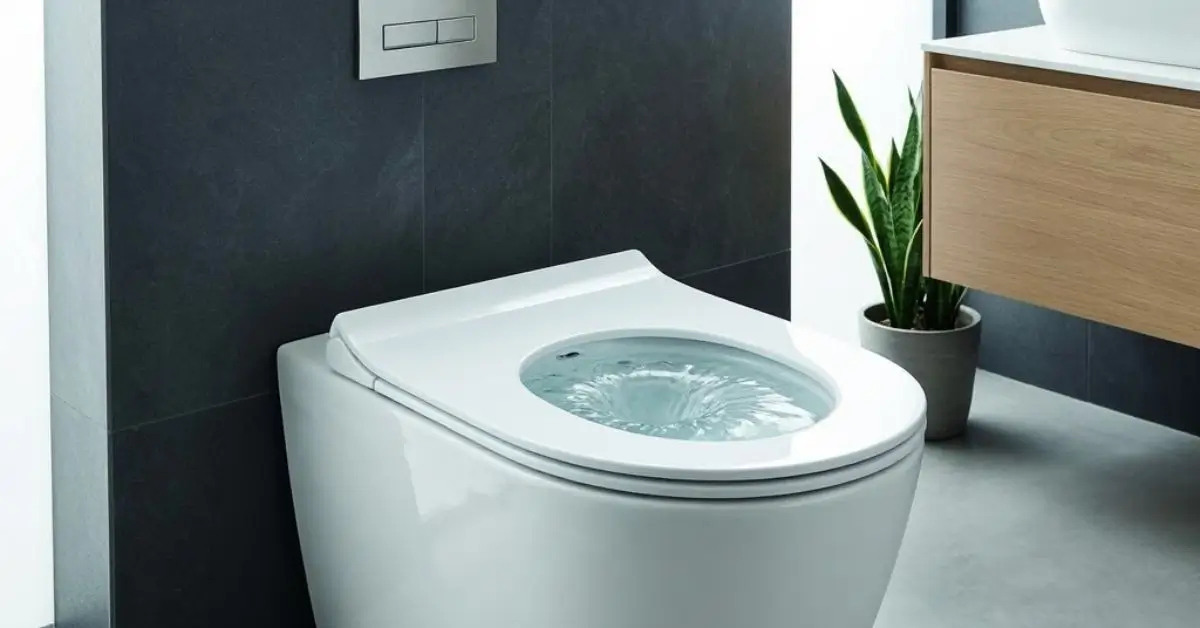
TOTO introduced the tornado flush, which uses two rim jets positioned to create a centrifugal, cyclonic water movement during the flush. Rather than water falling from the rim in a traditional curtain pattern, the water spirals around the bowl surface, covering it completely and cleaning the entire interior with each flush.
This technology is particularly effective at keeping the bowl clean between flushes and reduces the buildup that requires more frequent scrubbing. It is available in TOTO’s mid and upper-range models and represents one of the more meaningful engineering improvements in residential toilet design in recent years.
Understanding MaP Scores
The Maximum Performance (MaP) score is the most reliable objective measure of toilet flush performance available to US consumers. MaP testing uses soybean paste as a standardized waste simulant and measures how many grams a toilet can reliably clear in a single flush.
A MaP score of 500 grams is considered the minimum for residential use. Most quality toilets score between 800 and 1,000 grams. The best flushing toilets achieve scores of 1,000 grams or higher, meaning they clear a full kilogram of waste reliably in a single flush.
When evaluating any toilet, looking up its MaP score removes the guesswork from flush performance assessment. Toilets without published MaP scores should be viewed with some skepticism, as testing is voluntary and manufacturers of weaker-performing models often choose not to participate.
You can search MaP scores at mapflush.org, where the full database of tested toilets is available free.
What to Look for at Different Price Points
Under $200
Toilets in this price range are typically functional but come with compromises. Flush valves are often two inches rather than three, glazing may be partial rather than full, and MaP scores are generally in the 500 to 700 gram range. They work adequately in light-use bathrooms and for homeowners on strict budgets, but clogging resistance and bowl cleanliness between flushes will be noticeably lower than better models.
$200 to $400
This is where flush performance quality becomes consistent. Most major brands offer strong gravity-feed toilets in this range with three-inch flush valves, fully glazed trapways, MaP scores of 800 or higher, and WaterSense certification. TOTO Drake, Kohler Cimarron, and American Standard Champion 4 are examples in this price band that have developed strong long-term reputations.
$400 to $700
Dual-flush models, tornado-flush technology, elongated comfort-height designs, and more refined aesthetics become standard in this range. Flush performance is reliably excellent and the added features, quieter operation, improved bowl coating technologies, begin to deliver meaningful quality-of-life improvements in primary bathrooms.
Above $700
Wall-hung toilets, integrated bidet seats, touchless flush, and high-design models occupy this range. Flush performance is excellent but the primary differentiators are design, features, and installation complexity rather than flush performance alone.
Comfort Height Versus Standard Height
Comfort height toilets, sometimes called ADA height toilets, have a seat height of 17 to 19 inches from floor to seat, compared to the standard 15 to 16 inches. This raised height is easier for adults, particularly taller individuals and those with mobility limitations.
Comfort height is now the default choice for most US homeowners and is available across the full price spectrum. Standard height is worth considering only for households with young children where the taller seat creates access difficulty, or where personal preference specifically favors the lower seated position.
Round Versus Elongated Bowl
Round bowls have a shorter front-to-back dimension and suit compact bathrooms where toilet footprint matters. Elongated bowls extend further forward and are generally considered more comfortable for adult use.
In most US bathrooms with adequate space, elongated is the preferred choice. Round bowls are the practical choice when the bathroom layout is tight and every inch of clearance between the toilet and the door, wall, or vanity matters.
Toilet Performance Comparison Table
| Feature | Budget (Under $200) | Mid-Range ($200-$400) | Premium ($400+) |
|---|---|---|---|
| Flush valve size | 2 inch | 3 inch | 3 inch or dual-flush tower |
| MaP score typical | 500 to 700g | 800 to 1000g | 1000g |
| Trapway glazing | Partial | Full | Full |
| WaterSense certified | Sometimes | Usually | Yes |
| Clog resistance | Moderate | High | Very High |
| Bowl cleaning | Basic | Good | Excellent |
| Noise level | Moderate | Moderate | Low to moderate |
Brands Worth Trusting for Flush Performance
TOTO
TOTO is consistently regarded as the gold standard for toilet flush performance in the US. Their double cyclone and tornado flush technologies are engineering achievements that deliver measurably superior results across their lineup. If flush performance is the top priority, TOTO deserves serious consideration.
Kohler
Kohler produces reliable, attractive toilets across all price points. Their Class Five flush system, used in many mid-range models, delivers strong performance with a 3.25-inch flush valve that creates an impressive flush from 1.28 gallons.
American Standard
The Champion 4 from American Standard uses a four-inch flush valve, the largest in residential use, and routinely achieves perfect MaP scores. It is a straightforward, no-frills toilet that excels at the one thing that matters most: clearing the bowl every time.
Gerber
Gerber produces high-quality toilets that are well-regarded by professional plumbers but less visible in consumer marketing. Their Viper and Avalanche lines deliver excellent flush performance with fully glazed trapways at competitive mid-range prices.
Conclusion
The best flushing toilet for your home is one that combines reliable single-flush clearance with water efficiency and fits your bathroom’s practical requirements. In the US market, toilets in the $200 to $400 range from established brands like TOTO, Kohler, American Standard, and Gerber consistently deliver excellent performance without the complexity or cost of premium models.
Check the MaP score before buying, confirm the flush valve is three inches or larger, look for a fully glazed trapway, and choose comfort height if the bathroom serves adults primarily. Those four criteria produce a reliable, high-performing toilet that will serve without complaint for decades.
If this guide helped you understand what to look for, take a look at our related articles on how to install a toilet step by step and the best toilet seats for comfort and durability. Both give you the practical guidance for completing your bathroom project confidently.
Frequently Asked Questions
What makes a toilet the best flushing?
A three-inch or larger flush valve, fully glazed trapway, efficient bowl geometry, and a MaP score of 800 grams or higher. These factors together produce reliable single-flush clearance and strong clog resistance.
What is a MaP score?
It measures how much waste a toilet clears in one flush, scored from 250 to 1,000 grams. A score of 800 or above indicates strong performance. Check scores at mapflush.org before buying.
Are pressure-assisted toilets worth it?
Yes, for heavy-use or commercial bathrooms where clogging is a recurring problem. For standard home use, a quality gravity-feed toilet performs nearly as well with far less noise.
How many gallons per flush is best?
WaterSense certified toilets use 1.28 gallons per flush. The best models achieve this while maintaining high MaP scores, flushing powerfully without wasting water.
What is a comfort height toilet?
A toilet with a seat height of 17 to 19 inches, similar to a standard chair. It is easier for adults and those with mobility issues and is now the default choice in most US renovations.